
A wardrobe gap isn’t always about something you don’t own. Sometimes, it’s about the missing piece that could make several clothes you already have work together. It might be a versatile jacket, the right pair of shoes, or a basic piece that brings multiple outfits together.
The trick is to look beyond individual clothes and see how your wardrobe works as a whole. The easiest way to find it is to stop looking at your wardrobe as individual clothes and start looking at how those clothes work together and what is needed other than that.
Here’s a simple way to figure it out.
Start with your most-used clothes
Don't begin by looking at everything you own.
Pick the clothes you actually reach for during a normal week. Maybe it's two pairs of jeans, a couple of shirts, your favorite trousers, a few T-shirts and one jacket. Now, make combinations using only these pieces. You might be surprised by what happens.
If the same two or three combinations keep appearing, your wardrobe may be relying too heavily on a small group of pieces. That tells you something. You don't necessarily need more clothes. You may need something that gives your existing clothes more combinations.
Look for the “dead ends”
Here's a useful wardrobe exercise.
Take one item and ask: “How many other things can I wear this with?”
If the answer is one or two, you've found a dead-end piece. For example, you might own a bright printed skirt that looks great but only works with one top. Compare that with a neutral skirt that works with five different tops. The second piece gives your wardrobe more flexibility. When you notice several dead ends in the same category, that's where you should investigate further.
Build an outfit map
You can actually map your wardrobe on Okkai.
Tops → Bottoms → Layers → Shoes → Accessories
Now connect pieces that work together. For example:
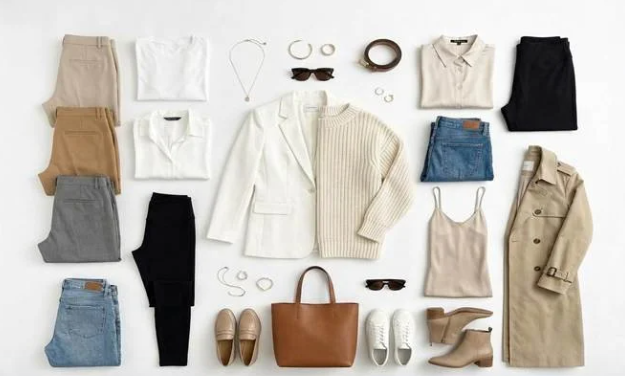
White shirt
→ blue jeans
→ black trousers
→ beige trousers
→ denim skirt
Blue jeans
→ white shirt
→ black top
→ knit sweater
→ blazer
The more connections an item has, the more useful it becomes. Now, look at where the connections become weak. If almost every outfit you're creating stops at “top + bottom”, perhaps you're missing good layering options.
If your outfits work until you reach shoes, maybe footwear is your actual gap.
Check your outfit ratios
Another way to spot a gap is to look at how many pieces you have in each category.
You might discover that you own:
12 tops + 3 bottoms + 1 jacket or 8 dresses + 1 pair of versatile shoes
There is no perfect number for any category. The point is to notice whether your wardrobe is balanced for the way you dress. Having twenty tops doesn't help much if you only have three bottoms you enjoy wearing.
Find the occasion you keep dressing for
Think about your calendar rather than your closet.
What do you regularly have to dress for?
If you work five days a week, your wardrobe needs to support that.
If you travel frequently, comfortable and versatile pieces may matter more.
If you attend weddings regularly, occasion wear becomes more important.
Try the “One Piece, Four Outfits” Test
Before buying something new, ask yourself: “How many different ways can I actually wear this?”

Take Muskan’s top as an example. The same top can create four completely different looks when paired with pieces already in her wardrobe:
Short skirt — a fun, casual look
Trousers — a more polished, put-together look
Denim jeans — an easy everyday outfit
Long skirt — a more elevated, feminine look
The point isn't to buy more clothes. It's to see how much more you can do with one piece you already have.
If one top can work across different outfits, occasions and styles, it has a real place in your wardrobe. And sometimes, the best wardrobe addition isn't another new piece it's discovering new ways to wear what you already own.
Look beyond clothes
Your wardrobe ecosystem includes much more than tops and bottoms.
A missing piece could be:
A neutral everyday bag
A comfortable pair of smart shoes
A belt that works with multiple outfits
A lightweight jacket
A simple jewelry set
A versatile scarf
These small additions can sometimes create more outfit options than another new clothing item. The best wardrobe isn't necessarily the one with the most clothes. Maybe you're missing the piece that connects the outfits you already have. It's the one where your clothes have multiple ways of being worn.
Sources
1.Mantri & Agarwal (2024) — “Fashion Accoutrements: Versatility for Multi-Utility Clothing – A Fantasy Wardrobe Concept https://www.granthaalayahpublication.org/Arts-Journal/ShodhKosh/article/view/1243
2.https://www.reddit.com/r/RitaFourEssenceSystem/comments/1c2lq3o/how_do_you_approach_wardrobe_gaps/
Leave a Comment
Your email address will not be published. Required fields are marked *